Key Takeaways
- Docks wear faster than decks because water attacks them constantly.
- Soft boards, splinters, and slick algae are early warning signs.
- Resurfacing now is far cheaper than a structural rebuild later.
Why Docks Wear Out Faster Than Decks
A dock lives the hardest life of any outdoor surface. It sits in constant sun, splash, and humidity. That mix breaks down wood and coatings quickly.
Water is the relentless enemy here. It soaks the boards, feeds rot, and grows algae. A dock that is not protected ages fast.
The Warning Signs to Watch For
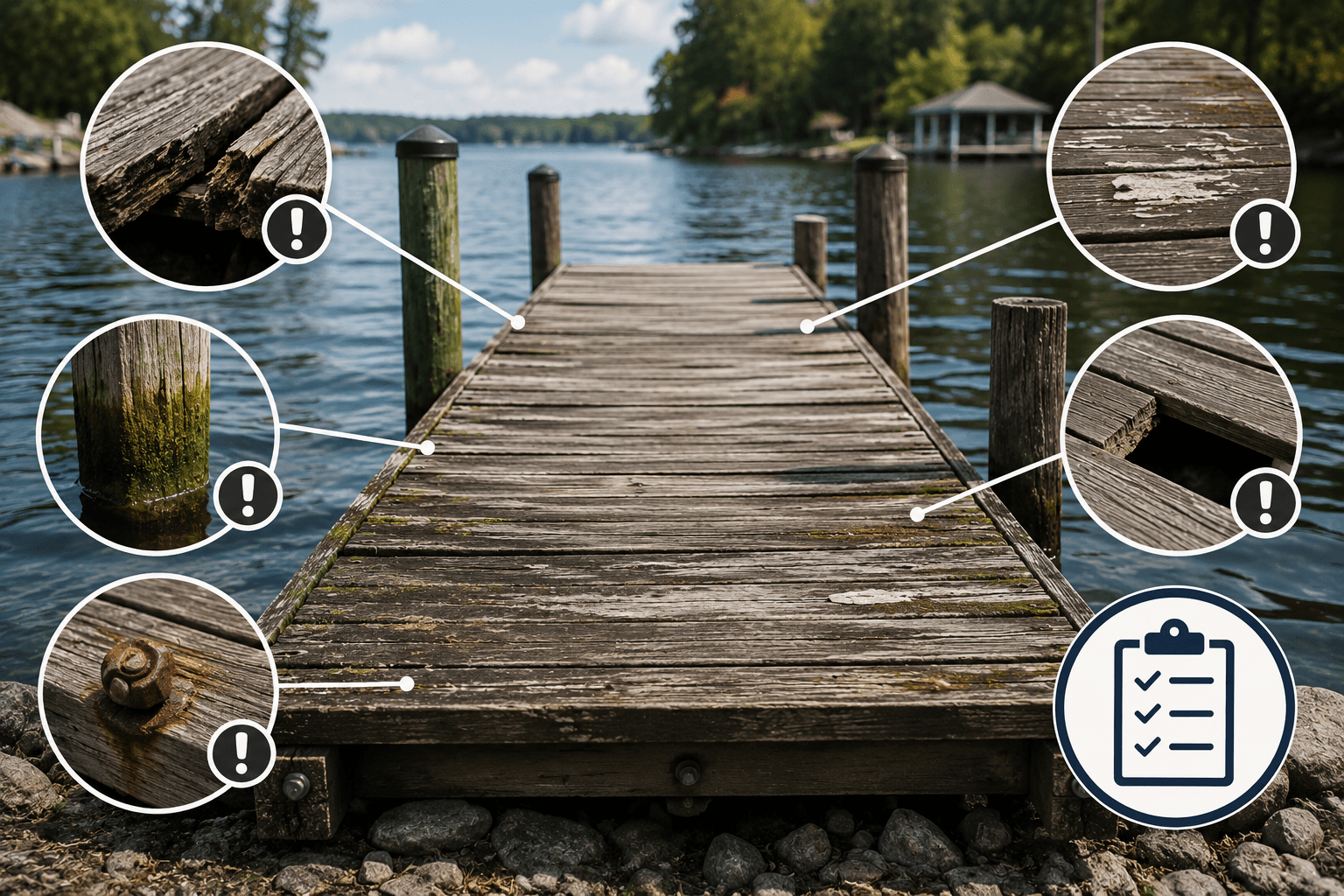
Your dock tells you when it needs attention. Walk it with a critical eye and look for these signs.
Soft or Spongy Boards
Boards that feel soft or bouncy underfoot are a red flag. That sponginess means water has gotten in and rot has started. It only spreads from there.
Splinters, Cracks, and Splits
Cracks and splinters show the surface is failing. They also catch bare feet and hands. Once the wood splits, water gets in deeper.
Faded or Worn Coating
A faded, thin, or peeling coating no longer protects the wood. The bare spots let sun and water attack directly. That is the moment to recoat.
Slippery Algae and Growth
Green or black growth means moisture is sitting on the surface. Algae makes a dock dangerously slick. It also signals that the coating has stopped shedding water.
Resurfacing vs. Full Repair
Not every worn dock needs a rebuild. Resurfacing renews the surface with cleaning, repair, and a fresh coating. A protective dock coating restores both looks and function.
Full repair is for structural problems like failing pilings. Resurfacing handles the deck surface before it gets that far. Catching it early keeps you in resurfacing territory.
Why a Slip-Resistant Surface Matters
A dock is wet by nature, so grip is safety. A slick surface is a fall waiting to happen. The CDC promotes safe surfaces around water, and a textured coating is a big part of that.
A good resurfacing adds traction along with protection. That keeps the dock usable and safe. It matters most for kids and bare feet.
What Resurfacing Involves
Resurfacing follows a clear order. The dock is cleaned, damaged spots are repaired, and a new coating goes on. The EPA notes that coatings release volatile compounds, so proper application and airflow matter.
The new coating seals the wood against water and sun. It also restores grip and appearance. Done right, 3D Deck and Dock Defense adds years to the dock.
How Water Causes Wood Rot
Rot needs moisture, and a dock has plenty. Water soaks into unprotected wood over time. Fungus then feeds on the damp fibers. The board softens and loses strength.
Exposed Fasteners and Nail Pops
Rising screws and nails are a warning sign. They mean the wood is shifting and shrinking. They also snag feet and lines. It is a cue the surface needs work.
Discoloration and Graying
Sun bleaches unprotected wood to gray. That graying shows the coating has worn away. The bare wood then absorbs more water. Color loss is an early sign to recoat.
Coatings Made for the Waterfront
A dock needs a coating built for water. General deck paint fails fast at the waterline. A marine-grade protective coating resists constant moisture. That is what a dock demands.
Why Early Action Saves Money
Surface problems are cheap to fix early. Ignored, they reach the structure below. Then pilings and beams are at risk. Resurfacing on time avoids a rebuild.
Slip Resistance for Families
A slick dock is a real hazard. Kids run and bare feet slip. A textured coating adds grip where it counts. Safety is a top reason to resurface.
Inspecting Your Dock Each Season
A seasonal walk-through catches problems early. Test boards for softness and check for cracks. Look for algae and rising fasteners. A few minutes can prevent a big repair.
Wood, Composite, and Concrete Docks
Different docks age in different ways. Wood rots and splinters. Composite fades and can crack. Concrete spalls and grows algae. Each benefits from the right protective coating.
Protecting the Structure Below
A good coating protects more than the surface. It keeps water out of the boards. That slows rot from reaching the frame. Surface care is structure care.
Cleaning a Dock the Right Way
Regular cleaning extends a dock's life. Remove algae, dirt, and debris often. Avoid harsh pressure that gouges the wood. Gentle, frequent cleaning works best.
Getting a Professional Assessment
When in doubt, get a pro to look. They can tell surface wear from structural damage. Then they recommend resurfacing or repair. An honest assessment saves money either way.
When Resurfacing Is No Longer Enough
There is a point where resurfacing cannot help. Failing pilings or a sagging frame need structural repair. A coating over a weak structure only hides the danger. That is when replacement enters the picture.
Frequently Asked Questions
How much does dock resurfacing cost?
It depends on size, material, and damage. Resurfacing is far cheaper than a rebuild. Catching it early keeps the cost down.
What is the lifespan of a dock?
A wood dock often lasts 10 to 20 years. A protective coating and upkeep push it higher. Neglect shortens it fast.
When should I resurface instead of repair?
Resurface when the surface is worn but the structure is sound. Full repair is for failing pilings and beams. An inspection tells you which.
Can I resurface a dock myself?
Small touch-ups are doable, but full resurfacing is tricky. Moisture and timing complicate the coating. A pro gets a lasting result.
How do I know if the rot is serious?
Soft, spongy, or blackened wood signals deeper rot. If large areas are affected, the structure may be at risk. Have it assessed before it spreads.
Catch Dock Damage Before It Spreads
A dock gives you plenty of warning before it fails. Soft boards, slick algae, and a worn coating are your cue to act. Waiting turns a simple resurfacing into a costly rebuild.
3D Deck and Dock Defense resurfaces and protects docks against sun and water. We also handle deck coatings, so your whole outdoor space stays protected.