A dock board that looks dry can still send a foot sliding the moment weight hits it. On the coast, water never really leaves the surface. Salt spray, morning dew, and shade-loving algae all work together against your footing. If your deck or dock sits by the water in coastal South Carolina or Georgia, slip resistance is not a luxury. It is the difference between a relaxed evening outside and a trip to urgent care.
Key Takeaways
- Waterfront decks and docks get slippery from algae film, salt residue, and trapped moisture, not just rain.
- A slip resistant deck coating adds texture and seals the wood, so the surface grips even when wet.
- Professional high-build systems outlast paint-on additives, and correct prep decides how long any coating holds.
Why Decks and Docks Turn Slippery by the Water
Slippery boards are not random. They come from predictable conditions that waterfront properties around Charleston and the Lowcountry deal with all year.
Algae and Biofilm Love Damp Wood
Algae, mildew, and thin biofilm grow anywhere moisture lingers. Shaded dock walkways and north-facing deck corners rarely dry out fully. That green or gray film becomes dangerously slick with even light dew.
Salt and Humidity Never Take a Day Off
Coastal air deposits a fine salt film on every horizontal surface. Salt holds moisture against the wood and speeds up the breakdown of old finishes. As the finish wears, the surface polishes smooth and loses what little grip it had.
Worn Finishes Trap Water Instead of Shedding It
Old stains and sealers crack and peel as boards flex. Water slips through those gaps and saturates the wood underneath. A waterlogged board stays wet longer, grows more algae, and gets more slippery with every season.
What Actually Makes a Coating Slip-Resistant
Not every product labeled "anti-slip" performs the same way. Two things matter: texture and durability.
Texture comes from fine aggregate suspended in the coating itself. Those granules create thousands of tiny high points that grip shoe soles and bare feet. Workplace safety rules treat traction seriously for good reason. OSHA's walking-working surfaces standards exist because slips, trips, and falls remain one of the most common causes of serious injury.
Durability decides whether that texture survives. Thin paints wear down at high-traffic spots within a season or two. A high-build coating, like the acrylic polymer system 3D Deck and Dock Defense installs, fully encapsulates each board. The texture is part of a thick, flexible layer that moves with the wood instead of cracking off it.
Your Options, From DIY Additives to Professional Systems
Walk into any hardware store near Charleston and you will find shelves of anti-slip paints and grit additives. They have a place, but know what you are buying.
Grit Additives and Anti-Slip Paints
You can stir sand-like additives into porch paint or buy pre-textured deck paint. These are inexpensive and fine for a small set of stairs. The trade-off is longevity. Most wear visibly within one to two seasons on a busy deck, and they do little to seal the wood beneath.
Textured Deck Resurfacers
Thicker rubberized or resurfacing products fill small cracks and add real texture. They perform better than paint but still depend heavily on surface prep. Applied over dirty or flaking boards, they peel in sheets.
Professional High-Build Coating Systems
A professionally installed system pairs deep cleaning, sanding, and board repair with a thick, marine-grade coating. On deck coating projects, that means a finish built for UV, foot traffic, and barefoot comfort. On docks, it means a surface engineered for constant water exposure and boat traffic. This route costs more upfront and lasts years longer.
Where Slip Protection Matters Most
Prioritize the spots where water and foot traffic meet.
Dock Walkways and Ladder Landings
The first few boards at a dock ladder or swim platform stay wet all day. These see bare, wet feet more than anywhere else on the property.
Steps and Stair Treads
Falls on stairs cause the worst injuries. Textured coating on every tread, plus solid railings, turns the most dangerous zone into one of the safest.
Pool Surrounds and Concrete Aprons
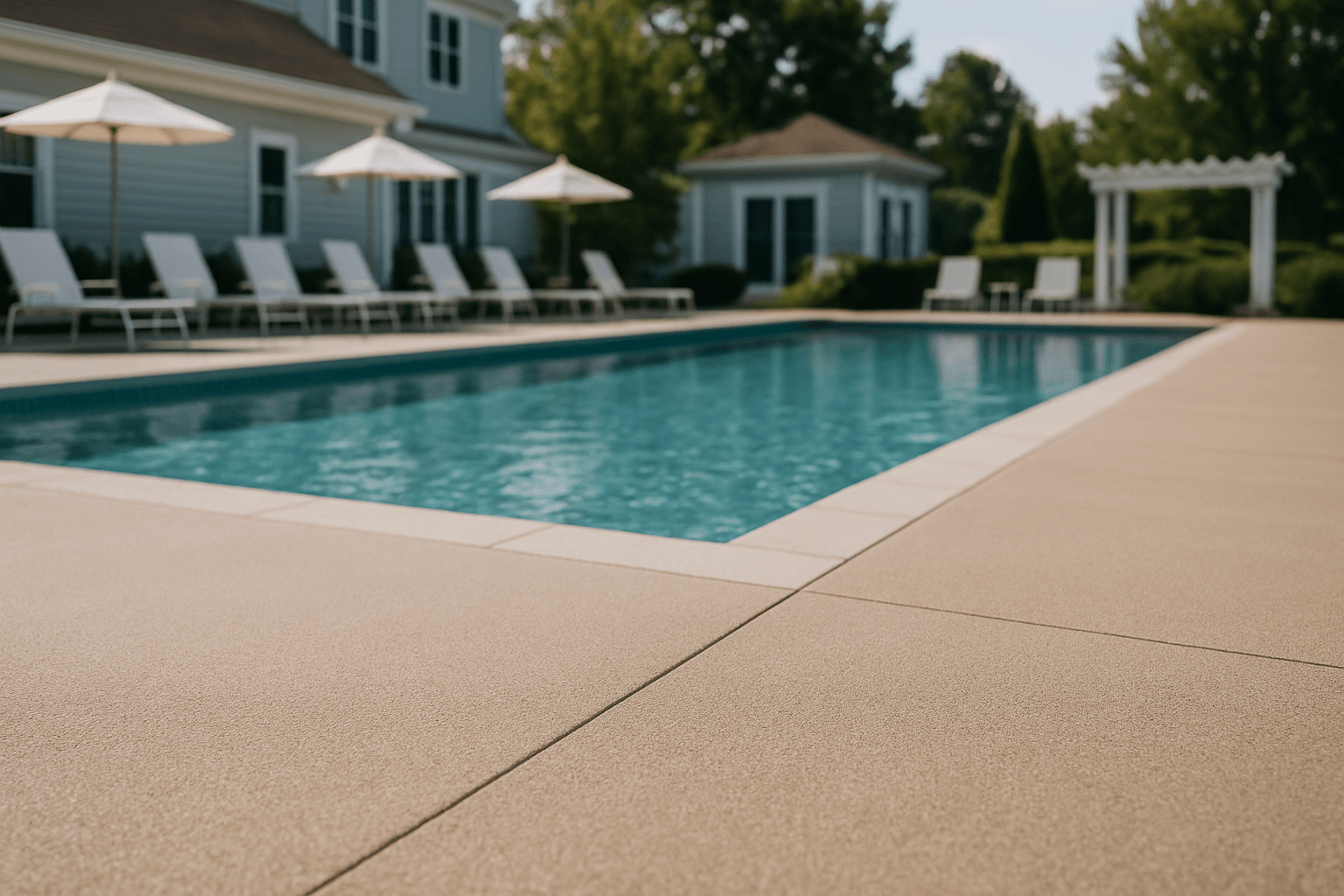
Smooth concrete around pools and boat ramps gets glassy with algae. Slip-resistant coatings bond to concrete as well as wood, so the whole path from house to water can carry the same grip.
How the Pros Apply a Slip-Resistant Coating
A coating only performs as well as the prep underneath it. A professional installation follows a sequence, and skipping any step shortens the life of the finish.
- Deep cleaning. Dirt, algae, and old mildew come off first, so the coating bonds to wood, not grime.
- Sanding. Light sanding removes failing finish and opens the grain for adhesion.
- Repairs. Cracked, splintered, or loose boards get fixed before anything is applied over them.
- Application. The coating goes on in even, controlled coats, so texture and thickness stay consistent.
- Curing. The surface needs roughly 24 to 48 hours to cure before regular foot traffic returns.
Done right, the result is a sealed, textured surface that grips in the rain and shrugs off salt air.
Keeping the Grip: Maintenance After Coating
Slip resistance fades when grime builds up, even on a great coating. A few habits protect it. Rinse the surface every few weeks to clear salt and pollen. Sweep off leaves before they compost into slippery patches. Once a year, walk the structure and check for standing water, loose fasteners, and wear at traffic lanes. The NADRA Check Your Deck program offers a solid inspection checklist for decks of any age. Catching a worn spot early means a quick touch-up instead of a full redo.
Frequently Asked Questions
What is the best anti-slip coating for a wood deck?
A high-build textured coating outperforms thin paints on wood. It seals the boards against moisture while the embedded texture provides grip, and it flexes with seasonal movement instead of cracking.
What can I put on my deck or dock to make it non-slip?
Options range from grit additives and anti-slip paints to professional coating systems. Additives are cheap but short-lived. A professionally applied textured coating lasts years and also protects the wood itself.
How do I stop my decking from being slippery?
Start by removing the cause: clean off algae, mildew, and salt film. Then add permanent texture with a slip resistant deck coating, so the surface grips even when it stays damp.
What is the best anti-slip deck paint?
Textured porch-and-floor paints work for light-duty areas like a small stair run. For waterfront decks and docks in coastal SC and GA, paint alone wears too fast. A thicker coating system holds its texture far longer.
Are rubberized deck coatings any good?
Rubberized coatings add real texture and flexibility, and they can perform well when applied over properly prepped wood or concrete. Their weakness is adhesion failure on dirty or damaged surfaces, which is why prep matters more than the product name.
Sure Footing Starts at the Water's Edge
Your deck or dock should invite people to the water, not make them watch every step. The fix is a prepared surface and a coating with real texture, installed by people who work in marine conditions every week. 3D Deck and Dock Defense provides wood dock refinishing and recoating across coastal SC & GA through certified professional installers. Call (803) 493-8539 and get a surface the whole family can trust in bare feet, rain or shine.