
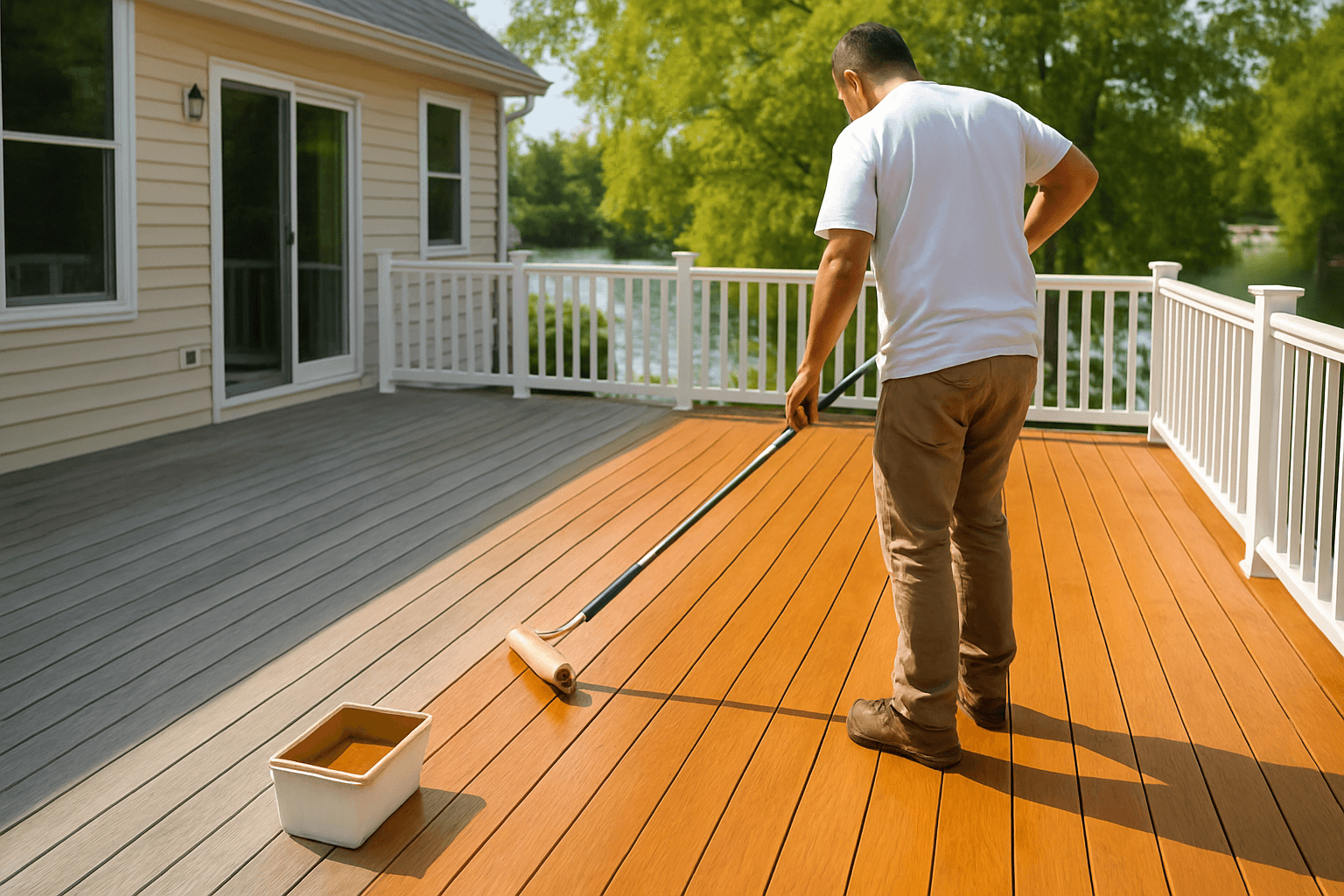
Most coating failures are not product failures. They are calendar failures. A can of coating that lasts eight years in May can peel by August if you apply it wrong. Temperature, overnight lows, and dew decide whether a coating bonds or sits on the surface. This guide gives you the windows that work, the ones that do not, and how to plan around them.
Key Takeaways
- Coat when air and surface temperatures sit between 50°F and 90°F.
- Late spring and early fall give the most reliable windows in most climates.
- Overnight lows matter as much as the daytime high. Keep them above 45°F.
The Temperature Window That Actually Matters
Every coating product lists a temperature range on the label. For most deck and dock coatings that range runs from 50°F to 90°F. Below 50°F the film will not cure properly. Wood fibers tighten in the cold and reject the resins. Above 90°F the surface flashes off too fast. You get lap marks, thin spots, and poor penetration.
Surface temperature is not air temperature. A south-facing board in direct sun can run 20 to 30 degrees hotter than the air around it. The USDA Forest Products Laboratory is blunt about this in its guidance on finishing exterior wood. Do finishing work only in clear weather, and avoid applying finishes to hot or cold surfaces. Follow the shade around your deck instead of chasing the sun.
The Overnight Number Most Guides Skip
Daytime highs get all the attention. The overnight low is what actually ruins coatings.
A coating needs its first 24 to 48 hours to cure. If the temperature drops near freezing inside that window, the film can whiten, bubble, or flake within months. Keep overnight lows above 45°F for two nights after you coat.
Then check the dew point. When the surface cools to the dew point, moisture condenses on your fresh coating. That is what causes the blotchy, sticky finish people usually blame on the product.
This is also why morning beats evening. Start after the dew has burned off, usually mid-morning. You then get a full day of daylight and warmth for the coating to set. An evening start runs straight into falling temperatures and settling moisture.
Season by Season: When to Coat and When to Wait
Spring
Late spring is the first solid window of the year. Wait until night temperatures hold above 45°F consistently. Early spring is tempting after a long winter, but the boards are often still carrying winter moisture.
Summer
Mid-summer works in mild climates and fails in hot ones. Surface temperatures on an exposed deck can pass 120°F by mid-afternoon. Work early in the day, follow the shade, and skip any day forecast above 90°F.
Fall
Early fall is the best window across most of the country. Humidity drops, the sun softens, and daytime temperatures often sit in the middle of the range. Aim for September through mid-October. Watch the overnight lows closely as the month runs on.
Winter
Winter is a no. Below 50°F the coating will not cure, and frost or trapped moisture will lift it off. November is already too late in most regions. If your days stay reliably above 50°F and your nights above freezing, a later window can work in the far south.
How to Tell Your Deck Is Ready
Timing the weather is only half the job. The other half is the surface itself. A coating bonds to a clean, dry substrate or it does not bond at all, which is the whole point of proper deck coating preparation.
Give the deck at least 48 hours of dry weather before you start. After a wash or heavy rain, the boards need that time to release moisture. Water that beads on the surface means the wood is still too wet or too sealed to accept a coat.
Check all of these before you open a can:
- Boards are dry to the touch and dry just below the surface.
- No rain in the forecast for 24 to 48 hours after application.
- Old coating is not flaking, peeling, or lifting anywhere.
- Fasteners sit flush, and no boards are cupped or soft underfoot.
Wood weathers long before it fails outright. William Feist's research on outdoor wood weathering describes how light and moisture roughen, check, and crack exposed wood. That work came out of the Forest Products Laboratory. Coating on schedule is what interrupts the cycle.
Docks Have a Narrower Window Than Decks
A dock sits in its own microclimate. The water below keeps humidity high and holds dew on the surface later into the morning. Spray, wake, and splash mean the boards may never fully dry during an active season.
Coat a dock in the driest stretch your season offers. Early fall usually beats spring, because water levels and rainfall are typically lower. Give dock boards an extra day of drying compared with a backyard deck. If any part of the dock has been submerged that year, treat its moisture content as suspect and wait longer.
3D Deck and Dock Defense specs coatings for both surfaces, and the dock system assumes constant moisture exposure.
Plan Backward From Your Coating Date
Most people plan forward and run out of season. Plan backward instead.
Pick your target week first. Then count back. Cure needs two dry days. The coat itself takes one to two days. Washing needs two drying days before that. Repairs and sanding add another day. That is roughly a week of usable weather you need to find.
Now add scheduling time. Installers book out in the shoulder seasons, because everyone wants the same September window. If you want early fall, start the conversation in July. Waiting for the first cool week means competing for the last slots of the year.
Keeping the Coating on Schedule After
A well-timed first coat sets up an easy maintenance cycle. Most decks want a fresh coat every one to three years, depending on exposure and foot traffic. Docks and heavily used decks fall at the short end of that range.
Inspect each spring. Look for dull patches, color loss, and water soaking in rather than beading up. Catching wear early means a maintenance coat instead of a full strip and restart.
Frequently Asked Questions
How cold is too cold to coat a deck?
Below 50°F is too cold for most products. The coating will not cure or penetrate properly. Keep overnight lows above 45°F for the first 24 to 48 hours.
Can it rain 12 hours after coating?
Usually yes, with some risk. Water-based products are often rain-safe by the 12-hour mark. Oil-based products want 12 to 24 hours. Cold or humid weather slows both down.
Is it better to coat in the morning or the evening?
Morning, once the dew has dried off. A cool surface lets the coating absorb before the sun heats the boards. Evening work runs into dew and leaves a tacky finish.
Is November too late to coat a deck?
In most regions, yes. Daytime temperatures fall below the 50°F minimum and nights approach freezing. Warm southern climates are the exception to that rule.
How many dry days do I actually need?
Plan for 48 hours of dry weather before you start. Then plan another 24 to 48 dry hours after the final coat goes down.
Do I need two coats?
Most systems specify two. Check the product data sheet, and respect the recoat window listed between coats.
Pick Your Window, Then Book the Job
Timing is the cheapest upgrade available on any coating project. The same product, applied in the right window, simply lasts longer. Late spring and early fall are your best bets, with overnight lows above 45°F and dry days on either side.
When you are ready to scope the work, our deck coating systems and dock coating systems pages cover the specifics. You can also find a 3D Deck and Dock Defense installer near you. Get a date on the calendar before the season fills up.